

How Indoor Plants Boost Wellbeing
The mental and physical benefits of being and doing things outdoors are well-known. The question is, do indoor plants as home decor replicate all or some of these benefits?
This is a weighty question because it’s estimated that people in the US and Europe spend roughly 90% of their time indoors. Research has shown a definite link between depression and constantly being indoors.
The World Health Organization supports this with reports that more than 5% of people worldwide suffer from depression. Associated stress and anxiety also contribute to a significant percentage of absenteeism and productivity losses in the workplace.
Indoor plants and caring for them can establish an essential connection with nature. Let’s examine the benefits of indoor plants and how bringing the outdoors inside helps to boost your overall wellbeing.
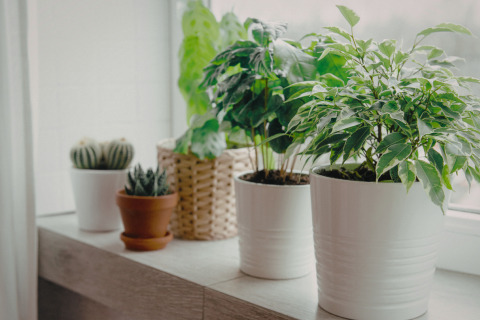
Indoor Plants Relieve Stress
Research published in the Journal of Physiological Anthropology stated that indoor plants have comforting and soothing effects on people, which reduce both psychological and physiological stress.
This study gave participants plant-based and technical tasks and measured their biological responses, namely heart rates and blood pressures. Those who repotted plants had lower stress responses than those who performed tasks on computers.
It’s noteworthy that the participants who were assigned computer tasks were young males who routinely work on computers. This means that even if you’re used to sitting indoors and working with technology, it can still spike your stress levels.
Indoor Plants Sharpen the Brain
There is research that maintains that indoor plants have positive effects on attention and concentration. So, studying in a space with live plants may put things into sharper focus.
One study compared the influence of fake plants, real plants, pictures of plants, and no plants on students. The consequent brain scans reflected higher activity in participants exposed to real plants.
Indoor Plants Are Therapeutic
Indoor gardening can help people who suffer from depression, anxiety, dementia and other similar conditions. Horticultural therapy is as old as time itself, but wasn’t recognized until modern science tapped into its benefits.
The therapeutic value of caring for plants has been researched and documented. Today, medical institutions often ‘prescribe’ indoor gardening as a therapy.
Indoor Plants Help With Recovery
Research done in hospitals found that patients who were exposed to and looked at plants recovered faster from illnesses, injuries or surgeries. These reports indicated that those exposed to greenery required less pain medication and were discharged more quickly.
Indoor Plants Improve Productivity and Creativity
There is evidence that plants in workplaces boost efficiency and creativity. Past studies found that productivity can increase by as much as 15%!
Aesthetically, greenery also improves the work environment while lifting the morale of employees. A survey of Amazon employees indicated that those with natural plants enjoyed greater job satisfaction and had more company loyalty. Plus, plants can help reduce stress and anxiety in stressful work environments.
Indoor Plants Improve Air Quality
Phytoremediation is the term used when referring to plants cleaning or removing contaminants from the air. NASA first studied this phenomenon all the way back in the 1980s when they were trying to find ways of improving the air quality in spacecraft. Their research showed that roots and used potting soil markedly reduced volatile organic compounds, or VOCs.
In the years that followed, there were studies that backed up these findings and studies that refuted them. More recent research maintains that you need a lot of indoor plants to be as effective as modern air-purifying or biofilter technologies.
Regardless, keeping house plants for a breath of fresh air cannot do any harm. Experts recommend species such as bamboo palms, ferns, rubber trees and spider plants.
Choose Plant Species That Promote Wellbeing
Believe it or not, some plants are better than others!
Psychological tests confirmed that humans have more positive reactions to curved objects. The same seems to be true of foliage.
Generally speaking, the participants in studies all had a positive response to greenery. However, they responded better to lush greenery and thick foliage, which they said made plants more attractive. This finding held up, as the same participants had negative responses to sparse or unhealthy plants.
Leaf shape also plays a role. Rounded leaves, such as those of the weeping fig, pothos or palm, seem to be more soothing than plants with narrow, pointy leaves. Some theorize that this may be our natural response to sharp edges.
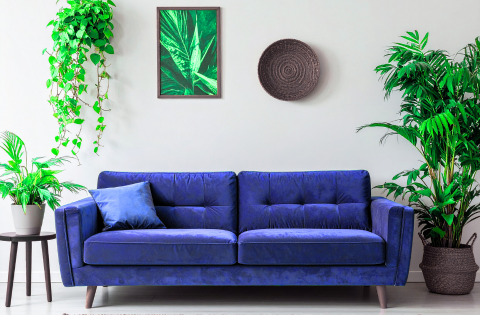
The bottom line? Choose something you like and find beautiful.
If it’s your first time getting house plants, we recommend low-maintenance species. These include popular ones such as mother-in-law’s tongue, ZZ plants, pothos and spider plants. Once your finger is greener, you can always look at more finicky, but equally stunning, varieties.
All through human history, plants have benefited us physically, as food, shelter and even clothing. In tandem with our evolution, we discovered the psychological and environmental benefits of our green friends. Beautify your home with indoor plants to reap the benefits.
 By: @grace
(Grace Thompson)
By: @grace
(Grace Thompson)