

Trending Kitchen Remodel Ideas for 2026
The all-white farmhouse kitchen is out. In 2026, warm tones, textured surfaces, and smarter layouts are driving remodels. Here's what's trending and what it’ll cost you.
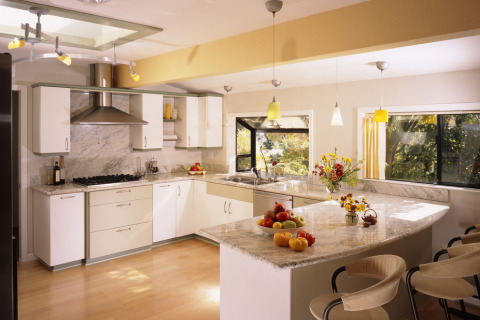
The all-white kitchen with shaker cabinets and subway tile had a good run. It started feeling fresh around 2012 and peaked somewhere around 2019, and by 2024 it had become the renovation equivalent of a beige carpet. Meaning it's not wrong, exactly, but no longer terribly interesting. The kitchen remodel ideas 2026 is producing are a direct response to that exhaustion, with warmer tones, richer materials, more personality, and smarter use of space over pure aesthetics. This guide is for homeowners who want to understand what's actually driving the current cycle and not just the design trends, but the cost implications, the durability trade-offs, and the resale value data. It's especially useful if you're planning a remodel in the $15,000-$50,000 range and want to make decisions you'll be satisfied with in five years rather than just five months. Whether you're doing a full gut renovation or a targeted refresh, understanding which 2026 trends represent lasting value versus short-term appeal changes how you spend the budget.
Cabinets and Color: The Biggest Visual Shift in Years
Kitchen cabinet color trends in 2026 have moved decisively away from stark white toward a spectrum of warmer, more saturated tones and the shift is more durable than a trend cycle because it's driven by fatigue with a specific look rather than a temporary fashion moment. The colors leading the 2026 cycle, like warm whites and creamy off-whites (Benjamin Moore White Dove, Sherwin-Williams Alabaster) read as intentional rather than sterile; deep greens in the sage-to-forest range; navy and deep teal; and matte black as a high-contrast accent, particularly on lower cabinets in a two-tone configuration. As for two-tone kitchens, upper cabinets in a lighter tone and lower cabinets in a darker or more saturated color, are the single most-specified cabinet approach in 2026 remodels, according to NKBA designer surveys. They deliver visual interest without committing the entire kitchen to a bold color.
The kitchen cabinet color trends 2026 data also contains a counterintuitive resale finding worth knowing. Dark, saturated cabinet colors photograph significantly better in real estate listings than all-white kitchens, and buyers fatigued by white renovations respond more positively to kitchens with a distinct visual identity. That said, highly personal colors (coral, terracotta, bright yellow) carry resale risk. The sweet spot for ROI-oriented remodelers is a color that reads as contemporary and considered without being polarizing. Think deep greens, navy, and warm whites as the current safest bets.
In terms of cabinet construction, full cabinet replacement can cost $15,000-$30,000 for an average kitchen. Cabinet refacing (replacing door fronts, drawer fronts, and hardware while keeping the existing box structure) costs $4,000-$9,000 and delivers roughly 80% of the visual impact for 30% of the cost. In kitchens where the box structure is sound, refacing is the most underreported value play in the entire remodel category. It's worth getting quotes for both before assuming a full replacement is necessary.
Countertops and Surfaces: What's Replacing What
The best countertops for kitchen remodel in 2026 are undoubtedly quartz. Quartz has overtaken granite as the most-installed countertop material in U.S. kitchens because it's non-porous (no annual sealing required), uniformly colored (no variation between slabs), and now available in finishes that convincingly mimic marble, concrete, and natural stone. It costs $50-$150 per square foot installed, depending on brand and region. Quartzite (natural stone, not to be confused with quartz) is the premium tier: beautiful, high-maintenance, and expensive at $80-$200+ per square foot installed. It suits homeowners who want natural variation and are willing to seal annually.
The backsplash trend in 2026 has shifted from the subway tile default to large-format slabs, continuing the countertop material up the wall as a single continuous surface, or using a large-format porcelain tile (12x24 or larger) with minimal grout lines. The slab backsplash is striking but expensive; large-format porcelain delivers a similar visual effect at significantly lower cost. Painted brick and limewash plaster are also gaining share as textural backsplash alternatives that add warmth without the cost or permanence of tile.
Layout and Functional Design: The Changes That Earn Back Their Cost
The most durable kitchen remodel investment is a layout improvement, rather than a finish or a recolor. If your current kitchen has poor workflow between the refrigerator, sink, and range (the "work triangle"), addressing that in a remodel pays back in daily usability in ways that no countertop upgrade can match. Peninsula additions (a connected counter extension that creates a breakfast bar or prep surface without the cost of a full island) add both function and perceived square footage; they cost $1,500-$4,000 in materials and labor for a basic addition. Full kitchen islands cost $3,000-$10,000+ depending on size, material, and whether plumbing or electrical is involved.
The "appliance garage" or hidden appliance trend is one of the highest-ROI small additions in a 2026 remodel. A cabinet section with a lift-up or pocket door conceals toasters, coffee makers, and blenders. This keeps the counter clear while maintaining accessibility. It should cost $500-$1,500 to add to an existing cabinet run and delivers the clean, uncluttered counter aesthetic that defines modern kitchen design without requiring any major work. Drawer-style microwaves built into the cabinet run (rather than hung over the range) are the appliance integration trend with the most consistent positive buyer response in listing photography.
Appliance Trends: Where the Technology Is Moving
Induction cooktops are the fastest-growing appliance category in 2026 kitchen remodels, driven by a combination of cooking performance advantages, new gas stove installation restrictions in California and New York City, and a broader cultural shift toward electric kitchens. Induction cooks faster than gas, is easier to clean, and poses no combustion risk but requires induction-compatible cookware and a dedicated 240-volt circuit. If your kitchen doesn't have a 240-volt circuit near the range, the electrical upgrade adds $300-$800 to the installation cost. That's worth knowing before comparing induction to gas on price alone.
Panel-ready appliances such as refrigerators, dishwashers, and occasionally range hoods that accept custom cabinet panels to blend seamlessly into the cabinet run are the premium appliance trend in 2026. A panel-ready dishwasher costs $100-$400 more than a comparable stainless model but makes the kitchen feel architecturally coherent in a way that freestanding appliances don't. For homeowners investing in custom or semi-custom cabinetry, it's worth the premium. For a mid-range remodel with stock cabinets, fingerprint-resistant stainless remains the practical standard.
The Cost and ROI Reality: What 2026 Remodels Actually Return
Here's what kitchen remodel cost 2026 data actually shows, across remodel scope:
The consistent pattern in kitchen remodel ROI data is that minor and mid-range remodels return a higher percentage of their cost than upscale renovations, because kitchen upgrade value is bound by the surrounding neighborhood's price ceiling. A $100,000 kitchen in a $400,000 neighborhood doesn't return $100,000. Homeowners planning to sell within three to five years should prioritize the cabinet refacing + countertop + appliance tier rather than a full gut renovation. Homeowners planning to stay 10+ years can justify a larger investment on quality-of-life grounds that the ROI table doesn't capture.
Conclusion
The kitchen remodel ideas 2026 is delivering represent a genuine improvement over the trend cycle that preceded them, with more durable materials, more considered color choices, and a functional design emphasis that holds its value beyond the immediate aesthetic moment. You should start by pulling up your current kitchen and honestly assessing whether the box structure of your cabinets is sound. If it is, get a refacing quote before assuming replacement is necessary. Look up Remodeling Magazine's current Cost vs. Value Report for your specific region to see how your local market's kitchen remodel ROI compares to the national averages in the table above, and identify the one change in your kitchen with the highest daily impact. This will usually be layout, lighting, or storage - and let that anchor your budget conversation rather than starting with the most visually dramatic option. Kitchen remodel ROI is real, but it's maximized when the decisions are practical first and aspirational second.
 By: @emma
(Emma Carlisle)
By: @emma
(Emma Carlisle)