

Top Tips for International Travel in 2026
What's the most useful international travel tip you can get? Not a packing cube recommendation. Not a loyalty program hack. It's this: most travel problems are preventable, and almost all of them fall into one of four categories - documentation issues, money problems, communication failures, and overpacking. The rest is irrelevant. This guide skips the 50 item list format and focuses on the tips that actually change outcomes. It's for travelers who want to feel genuinely prepared, not just buried in advice they'll forget by the time they board their flight. If you've ever traveled domestically but never internationally, you'll find the international specifics here more useful than any general overview. And if you're a seasoned traveler who's never had a serious trip go wrong, it's worth asking yourself whether you were prepared, or if you just got lucky.
Documents and Safety: The Stuff That Grounds You
Document problems are the most preventable form of travel disruption. Before any international trip, run through this pre-departure travel checklist:
The cloud stored passport photo is more useful than a physical photocopy because if your bag or wallet is stolen alongside your passport, the physical copy goes with it. A photo in your email or a cloud drive, accessible from any device, isn't going anywhere. The State Department's STEP program (Smart Traveler Enrollment Program) takes five minutes to register to and ensures the embassy can get in contact with you in case of an emergency.
Travel Packing Tips and The Half-Rule
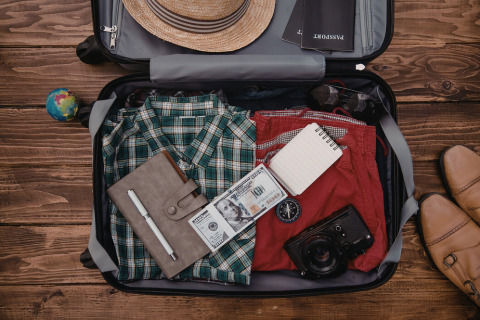
The most consistent mistake across every experience level is overpacking. It's so common that it's almost not worth mentioning, if not for the fact that people still do it, every time, every trip. Here's a travel packing tip that will actually help; lay out everything you think you need, then put half of it back. You will not miss it. Clothes are the primary culprit. Four days of outfits for a ten-day trip works fine with a sink rinse on travel days. Laundry services in most international destinations cost $3-$8 per load. The weight you save in your bag translates directly into mobility, reduced checked bag fees, and the ability to buy things on the trip if you so please. The only things that genuinely deserve space are electronics and their chargers, any prescription medication in original bottles, and your first-night address written on paper in case your phone dies on arrival. Everything else should come secondary.
Managing Money Abroad Without Paying Extra for It
Currency exchange booths at airports and tourist area exchange windows have the worst rates you'll find outside of a casino. Managing money abroad starts with one simple decision and that’s getting a travel focused bank account or credit card before you go. Charles Schwab's checking account refunds all ATM fees worldwide and uses the actual exchange rate with no markup. It's genuinely one of the best financial tools available to American travelers. Wise (formerly TransferWise) and Revolut offer similar benefits on debit-style travel cards. Once abroad, withdraw local currency from an ATM inside a bank branch rather than a freestanding street ATM, which carries higher fraud risk and worse rates. Credit cards with no foreign transaction fees (Chase Sapphire, Capital One Venture and others) are worth having as backup even if you're primarily using cash.
Staying Connected Without Paying Your Carrier's Roaming Rate
International roaming through most US carriers is both expensive and unnecessary. Download offline maps for your destinations, both Google Maps and Maps.me allow full offline navigation without data, before you board. For staying connected abroad, an eSIM through a provider like Airalo or a local SIM at the destination airport is almost always cheaper than roaming. Airalo offers data-only eSIMs for most countries starting at $5-$15 per week. If you're visiting multiple countries, a regional eSIM plan is worth comparing against country-by-country options. Two apps to have regardless of data situation: WhatsApp (works on Wi-Fi, free) and your airline's app (push notifications when your gate changes, often before the departure board updates).
Flexibility Is Not a Platitude. It's a Practical Skill
Every travel guide tells you to "be flexible". This one means something specific by it; build one completely unscheduled day into every 5-day trip. Not because spontaneity is romantic, but because something will go wrong - a delay, a closure, a stomach issue, a place you didn't expect to love and wanted more time in. Travelers who over-schedule every hour of a trip end up stressed or missing the best parts. The other half of this is lowering your expectations for the first 24 hours of any trip. Jet lag is real, you'll be disoriented, and the first day rarely looks like Instagram or goes quite how you’d expect. Give yourself that time to transition without guilt.

The international travel tips that actually change trips are the ones you implement before you leave, not the ones you read on the plane. You should start by checking your passport's expiration date and look up the entry requirements for your target destination on the State Department's travel page. Then you should ensure you notify your bank of your travel dates and either sign up for a no foreign fee card or look into a Wise or Revolut travel account. Then finally, you should download offline maps for your destination, possibly look into an eSIM option for staying connected abroad, and practice the half-rule on your packing list. Remember, lay it all out, then cut it in half. Prepared travel isn't paranoid travel. Just make sure the preventable problems stay prevented, and you’ll be just fine.
 By: @olivia
(Olivia Harper)
By: @olivia
(Olivia Harper)